 Moving on a Budget
Getting Your Rental Deposit Back in Canada: The Evidence Pack and the Deadlines That Protect It
The usual advice is to scrub harder. The deposit is actually decided by reports, photos, and one written address, and in one large province there is no damage deposit to lose at all.
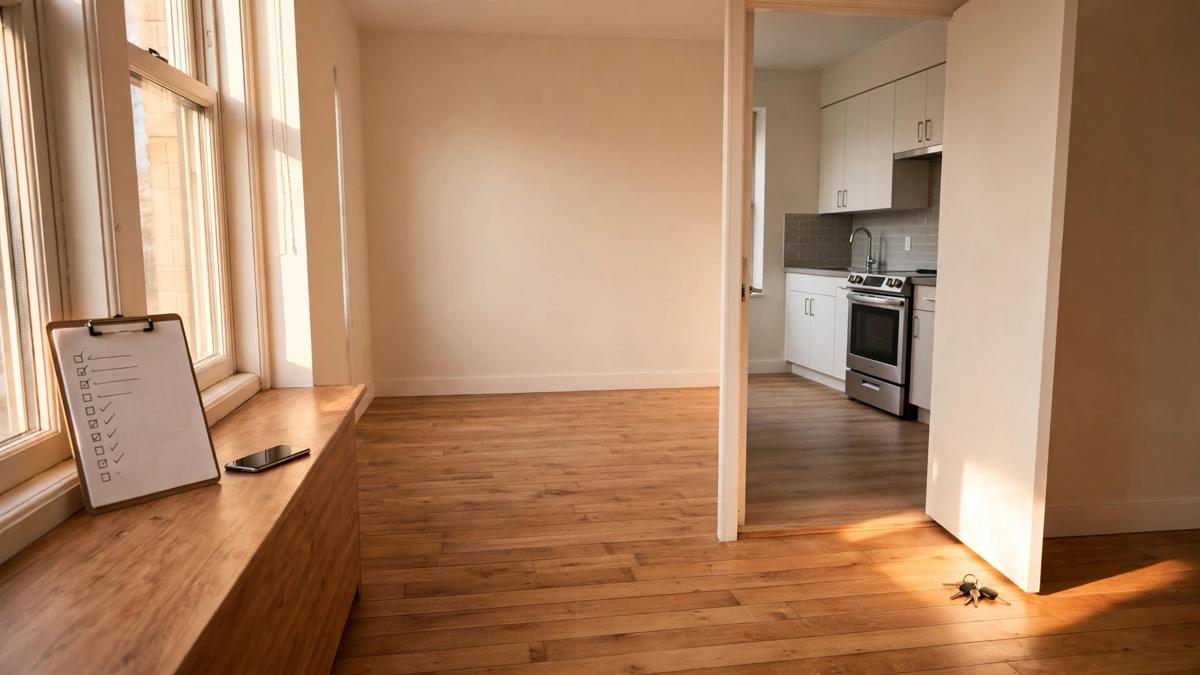
Most move-out advice starts with a mop. Start with a question instead: does your province even let a landlord hold a damage deposit? In Ontario, the answer is no, and that single fact changes where your effort belongs. Where deposits do exist, in British Columbia and Alberta most clearly, the money follows the paperwork: a condition report signed at both ends of the tenancy, dated photos, and a forwarding address delivered in writing. Cleaning matters, but cleaning without evidence loses arguments that cleaning with evidence wins. This guide is general information about the rules, not legal advice, and provincial tenancy offices remain the authority for any real dispute.
The trap: in Ontario there is no damage deposit to lose
The Ontario Landlord and Tenant Board's guide to the Residential Tenancies Act is blunt. A landlord may collect a rent deposit of no more than one month's rent, and that deposit can only be used as the rent payment for the last rental period. It cannot be used for anything else, such as repairing damage to the rental unit. So an Ontario landlord who announces a deduction for cleaning or a scuffed wall is not describing a deposit deduction at all; there is no deposit fund available for that purpose. The landlord's route for genuine damage is an application to the Board, with evidence, after the fact.
Ontario tenants still owe two things, and the same guide names both: keep the unit to a standard of ordinary or normal cleanliness, and repair or pay for damage caused by the tenant, a guest, or another occupant. Clean properly and fix what you actually broke. Just know that the money for a dispute does not come out of a deposit, because legally there is not one.
What is actually at risk, province by province
| Province | Deposit the landlord may hold | Return clock | What starts or drives the clock |
|---|---|---|---|
| Ontario | Rent deposit only, up to one month's rent, applied to the last rental period | No damage deduction exists to wait for | Damage claims go to the Landlord and Tenant Board |
| British Columbia | Security deposit up to half a month's rent, plus a pet damage deposit up to half a month's rent | 15 days | The landlord receiving your forwarding address in writing |
| Alberta | Security deposit up to one month's rent | 10 days for the refund or a statement of account | The day you give up possession of the unit |
| Quebec | No deposit may be required; first month's rent in advance only | Not applicable | Not applicable |
Two details inside that table carry most of the money. In BC, the landlord may keep deposit money only with the tenant's written permission or an order from the Residential Tenancy Branch; a landlord cannot simply decide. And in Alberta, if deduction amounts are not yet known at day 10, the landlord sends an estimated statement then and a final statement with any remaining balance within 30 days. A tenant who knows which clock is running can tell the difference between a landlord who is slow and a landlord who is late.
The evidence pack: five items, in order
- The move-in condition report. In BC, landlord and tenant inspect together at move-in and move-out and complete a Condition Inspection Report, Form RTB-27; the landlord must offer at least 2 opportunities to inspect and give the tenant a signed copy. If your tenancy has one, it is the baseline every later claim is measured against. If it does not, that absence itself limits what a landlord can prove.
- Your own dated photos at move-in. Photo and video documentation at both ends of a tenancy is the strongest defence against unfair deductions. Photograph floors, walls, appliance interiors, and any existing damage, and keep the originals with their dates intact.
- Show up to the move-out inspection. In BC, a tenant who does not participate in the move-out condition inspection may lose the right to the return of the deposits, and a landlord who fails to complete the inspection may lose the right to claim against them. Attendance is not a courtesy; it is a right with money attached.
- The same photos again, after cleaning. Repeat the move-in angles in the empty, cleaned unit, and add the meter readings. The pair of sets, before and after, is what turns "it was not like that" into a short conversation.
- Your forwarding address, in writing. In BC this one document starts the 15-day return clock, and you can provide it within one year of the tenancy ending, though there is no reason to wait. Deliver it in a way you can prove, and keep a copy.
What success looks like: a signed move-out report, two matched photo sets, and a dated copy of the forwarding address letter, all in one folder, before the keys are handed back.
Clean it yourself or pay a cleaner: the break-even
Worked example, with the deposit figure derived from the sourced BC cap and the cleaning figures labelled as assumptions to replace with your own quotes. A BC tenant paying $1,800 a month in rent has a security deposit of at most $900, half a month's rent. Add a pet deposit and up to $1,800 total can be in play.
- DIY route (assumed): $40 of supplies you do not already own, plus roughly 6 hours of your time across the kitchen, bathroom, floors, and windows.
- Professional route (assumed): a move-out clean quoted at $300 for a one-bedroom, done in one visit, with the oven and fridge interiors included.
- The decision rule: the cleaner is worth paying when the realistic deduction risk exceeds the quote. A landlord's cleaning claim is judged against the standard of reasonably clean, and in BC the tenant pays cleaning costs if the unit is not left clean at move-out. If your own clean honestly reaches that standard and your evidence pack is complete, keep the $300. If you are moving long distance, working the same week, or facing a carpet and oven situation you know is beyond a surface clean, $300 spent to protect $900 is a rational trade, not a luxury.
What never makes sense is the middle failure: paying for a clean and skipping the evidence. A paid clean with no move-out inspection and no photos still leaves the argument open. Spend on documentation first; it costs almost nothing, and then decide whether the cleaning itself needs money too.
When the money does not come back: the deadline ladder
- BC, day 15 passes: if the landlord takes no action within 15 days of receiving your forwarding address, you can file a direct request application for the deposit's return, and the landlord may be ordered to pay double the amount of the deposits. A tenant can submit that application 20 days after the tenancy has ended and the forwarding address was given.
- Alberta, day 10 passes: the refund, or the balance with a statement of account showing the deposit, interest, deductions, and balance, was due within 10 days of you giving up possession, delivered or postmarked. No money and no statement by then means the landlord is late, and the dispute route is Alberta's tenancy dispute service or the courts.
- Ontario, a deduction is announced: there is no deposit to deduct from. If a landlord collected an amount beyond the permitted rent deposit, or applied the rent deposit to something other than the last month's rent, the Landlord and Tenant Board is the forum, and tenants generally have one year to apply about an illegal charge.
- Everywhere: provincial tenancy boards handle these disputes without a lawyer, and the evidence pack from the section above is what you bring.
The move-out walkthrough: what done looks like
Walk the empty unit once, slowly, in this order. Kitchen first, oven and fridge interiors open and photographed. Bathroom next, fixtures and fan cover. Then floors and walls room by room, matching your move-in angles. Windows and tracks last, because they are the most commonly claimed and the most commonly forgotten. Read the meters, photograph them, and photograph the locked door as you leave. Hand over every key, since unreturned keys are one of the few charges that are simple to prove. Then send the forwarding address in writing the same day. The deposit was decided less by the state of the unit than by whether you can show the state of the unit, and now you can.
— Penny Hughes, Money Writer — Saving Desk